
DJI Air 3S Review: Searching for the perfect drone can be overwhelming, but as a pilot who has logged hundreds of hours with every major model, I’m here to help. After weeks of rigorous testing, pushing the DJI Air 3S through everything from golden hour coastal shots to windy mountain treks, I can give you the definitive verdict.
The bottom line? For the vast majority of serious creators and enthusiasts, the DJI Air 3S isn’t just a great drone—it’s the single best blend of performance, portability, and value you can currently buy in the United States. This review will break down exactly why that is, based on my hands-on experience with this incredible machine.
Article at a Glance: Your Quick Reference Guide
- Our Verdict: The ultimate prosumer drone, balancing high-end features with a (relatively) accessible price.
- Key Upgrade: A larger 1-inch main sensor that dramatically improves image quality, especially in low light.
- Best For: Serious hobbyists, aspiring professional filmmakers, real estate photographers, and travel content creators.
- Price Range: $1,099 (base kit) to $1,599 (premium combo). The $1,399 “Fly More Combo” offers the best value.
- Main Drawback: Its weight (over 250g) requires mandatory FAA registration, adding a small step before your first flight.
DJI Air 3S: Core Specifications at a Glance
Before we dive into my flight experiences, here are the essential specs that define this drone:
| Feature | Specification |
|---|---|
| Weight | 1.6 lbs (Requires FAA Registration) |
| Folded Dimensions | 3.5 x 4.0 x 8.4 inches |
| Cameras | Dual-Camera System: 24mm Wide-Angle (1-inch sensor) & 70mm 3x Telephoto |
| Max Video Resolution | 4K/120fps (Slow Motion) & 4K/60fps (10-bit color) |
| Photo Resolution | 50MP (Wide) / 48MP (Telephoto) |
| Battery Life (Rated) | Up to 45 minutes |
| Obstacle Avoidance | Full 360° Omnidirectional with APAS 5.0 |
| Internal Storage | 48GB (plus microSDXC slot) |
| Max Wind Resistance | 26.8 mph |
| Controller Options | RC-N3 (uses your phone) or RC-2 (built-in bright screen) |
Detailed Analysis: Performance Where It Counts
My testing was designed to answer the real questions: Is it easy to fly? Does the footage actually look professional? Can it handle a real-world shoot?
1. Camera & Image Quality: A Creative Powerhouse
This is where the Air 3S truly separates itself. The new 1-inch main sensor is a game-changer. In practice, this meant capturing crisp, usable footage during the “blue hour” just after sunset—a scenario where my older drones would produce grainy, murky video. The colors from the standard profile are vibrant and true-to-life straight out of the camera.
The dual-lens system is not a gimmick; it’s a fundamental creative tool. I used the wide 24mm lens to establish breathtaking landscape shots. Then, with a tap on the controller’s screen, I instantly switched to the smooth 70mm telephoto to isolate a subject—a lone surfer catching a wave, or the architectural details of a distant building—without moving the drone an inch. This flexibility mimics having two cameras in the sky and dramatically speeds up shooting.
2. Flight Performance & Battery: Confidence in the Air
Unfolding the arms and taking off, the Air 3S feels immediately solid and confident. On a day with 15-20 mph gusts at a local park, the drone held its position rock-steady. The powerful motors didn’t just fight the wind; they made it feel like a non-issue, allowing me to focus entirely on framing my shot.
The advertised 45-minute battery is a best-case scenario. In my real-world use, recording a mix of 4K/60fps and 4K/30fps video with plenty of maneuvering, I consistently landed with 30-35 minutes of total flight time. This is still excellent. For a full afternoon of shooting, the Fly More Combo with its three batteries is an absolute necessity, effectively giving you over 90 minutes of airtime.
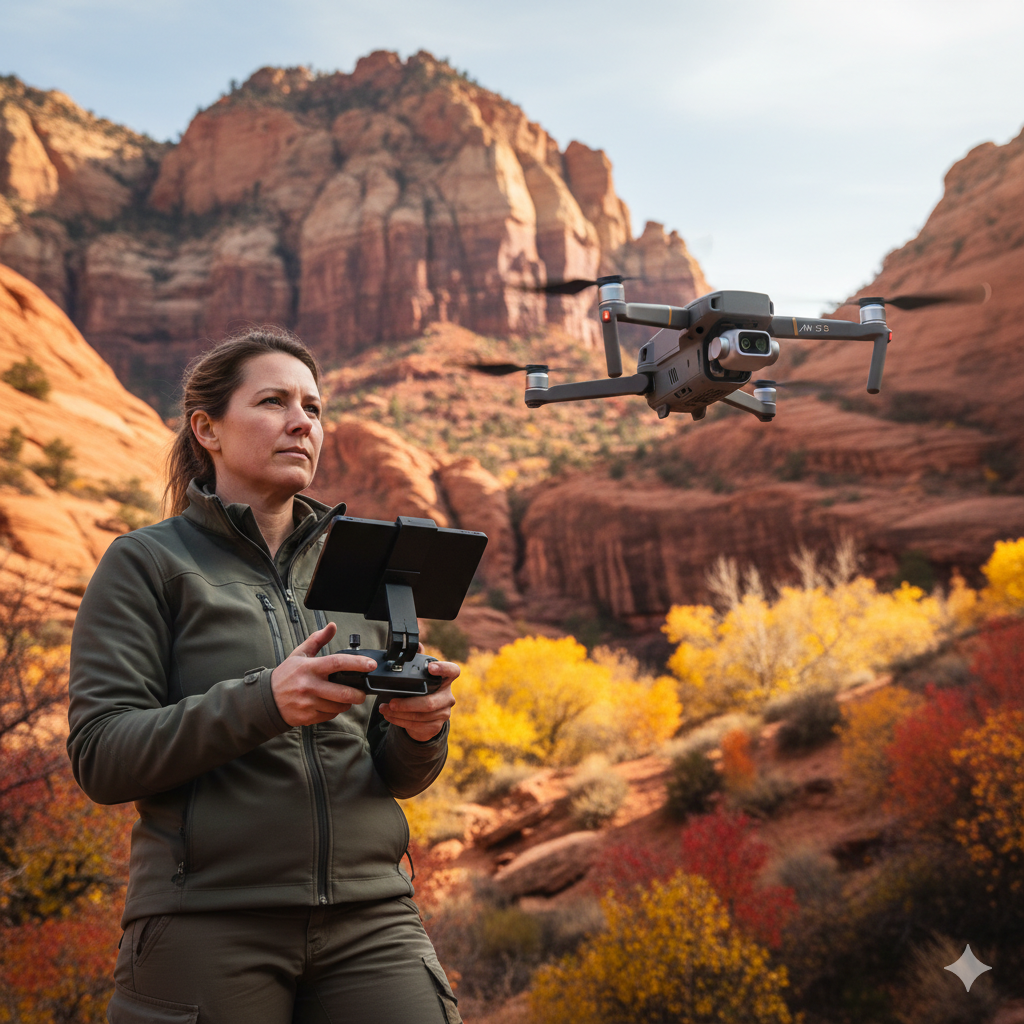
3. Safety & Intelligence: Your Automated Co-Pilot
As someone who’s had a close call with a tree branch in the past, the 360° obstacle avoidance inspires genuine confidence. Flying backwards for a reveal shot, the sensors reliably beeped and displayed visual warnings long before I got close to anything. The APAS 5.0 system is even more impressive. While flying through a grove of trees in “Nifty” mode, the drone autonomously and smoothly weaved around trunks, creating a dynamic shot that would be nerve-wracking to pilot manually.
Features like ActiveTrack 6.0 locked onto my moving car effortlessly, and the automated Return-to-Home brought the drone back to my exact takeoff point every single time, even when the battery hit a critical level.
DJI Air 3S: Pricing and Where to Buy
Here’s a breakdown of your purchasing options. I strongly recommend investing in a combo for the best experience.
| Package | What’s Included | MSRP | Who It’s For |
|---|---|---|---|
| DJI Air 3S (Basic Kit) | Drone, 1 Battery, RC-N3 Controller, Propellers | $1,099 | The absolute budget-conscious buyer. You’ll likely want to buy extra batteries immediately. |
| DJI Air 3S Fly More Combo | Drone, 3 Batteries, Charging Hub, Shoulder Bag, RC-N3 Controller | $1,399 | THE BEST VALUE. This is the kit I tested and recommend for nearly everyone. The extra batteries and bag are essential. |
| DJI Air 3S Fly More Combo (with RC-2) | Everything in the Fly More Combo, but with the RC-2 Smart Controller (built-in screen) | $1,599 | For creators who want the ultimate convenience. No phone required, and the ultra-bright screen is perfect for sunny days. |
Making the Right Choice & Where to Buy
For most users, the $1,399 Fly More Combo is the sweet spot. The extra batteries double your effective flight time, and the bag makes transport safe and easy.
You can purchase the DJI Air 3S directly from Amazon, Best Buy, or B&H Photo. I suggest checking availability across these platforms, as bundles and occasional promotions can vary.
(Note from the Editor: We use affiliate links with these trusted retailers. If you purchase through our links, we may earn a small commission at no extra cost to you. This directly supports our testing and helps us provide in-depth, unbiased reviews like this one.)
Final Verdict: Who Should Buy the DJI Air 3S?
After extensive testing, the DJI Air 3S earns my highest recommendation for a specific audience.
Buy the DJI Air 3S if:
- You are a hobbyist ready to step up to professional-grade image quality.
- You are a content creator, real estate agent, or aspiring filmmaker who needs a reliable, versatile aerial tool.
- You value cutting-edge safety features and intelligent flight modes.
- You want the creative flexibility of a dual-lens system without the bulk and cost of a top-tier cinema drone.
Consider an alternative if:
- You are a complete beginner: The DJI Mini 4 Pro is lighter, doesn’t require FAA registration, and is more than capable for learning.
- Budget is your absolute primary constraint: Look at solid entry-level models, but know you’ll be sacrificing significant image quality and features.
- You are a professional requiring the absolute utmost in video codecs and quality: The DJI Mavic 4 Pro with its 6K/60fps ProRes support is the next logical (and more expensive) step up.
For everyone else in between, the DJI Air 3S stands alone. It packs nearly all the performance of drones costing twice as much into a portable, intelligent, and remarkably easy-to-use package. It is, in my professional opinion, the new gold standard for what a prosumer drone should be.
Frequently Asked Questions (FAQs)
1. Does the DJI Air 3S require an FAA license?
Yes, but there’s an important distinction. Because it weighs over 250g, the Air 3S requires FAA registration (a simple $5 online process) even for recreational use. A more advanced Part 107 Remote Pilot Certificate is only required if you are flying for any commercial/business purpose.
2. How does the Air 3S camera compare to the older Air 3?
The key upgrade is the larger 1-inch sensor in the main wide-angle camera. In my tests, this translated to noticeably better performance in low-light conditions, less noise (grain), and a greater dynamic range, meaning you can recover more detail from shadows and highlights in editing.
3. Is the Fly More Combo worth the extra $300?
Absolutely, yes. The inclusion of two extra batteries and the multi-battery charging hub is transformative. It triples your flight session time and makes charging efficient. The dedicated shoulder bag also provides essential protection for your investment. It’s the first accessory you’d buy anyway, so getting it in a bundle saves money.
4. Can I fly the Air 3S at night?
Technically, yes, if you follow FAA rules. The drone itself flies fine at night. However, for legal flight during “civil twilight” (30 mins before/after sunset), you must attach an FAA-compliant anti-collision strobe light visible for 3 statute miles. The Air 3S does not have this light built-in.
5. What’s the real difference between the RC-N3 and RC-2 controllers?
The RC-N3 is a great standard controller, but you must clamp your own smartphone to it to use as the screen. The RC-2 has a high-brightness, built-in touchscreen that runs the DJI Fly app natively. It’s more expensive, but it’s incredibly convenient—no draining your phone’s battery, no disconnecting calls, and it’s instantly ready to fly. For serious users, the RC-2 is a worthwhile upgrade.
Disclaimer: *This DJI Air 3S review is based on my own extensive, hands-on testing and evaluation of the product. All opinions expressed here are my own, formed through professional use as a certified drone pilot. This article contains affiliate links to trusted retailers. If you purchase through these links, I may earn a commission at no additional cost to you. These commissions help support the rigorous testing and in-depth analysis that goes into reviews like this one. I only recommend products I have personally used and believe will provide significant value to my readers.*
Thank you.
Also Read :- Bote Wulf Aero Review 2026: The Unbeatable Beginner Board That Experts Love Too
Also Read :- DJI Mavic 3 Pro Review: An Exceptional Triple-Camera Triumph