

Non-Habit Forming Sleep Aid By Natasha Morgan — Health & Sleep Supplement Researcher
Introduction
It’s 2:17 a.m., and you’re lying awake wondering whether a non-habit forming sleep aid even exists — or whether every option will eventually make you dependent. You’ve heard the Ambien stories. You’ve felt the Benadryl fog. And somewhere in the back of your mind, a quiet fear keeps repeating: I don’t want to need something just to sleep.
I hear this from readers constantly. Over the past decade, I’ve reviewed more than 15 sleep supplements, dug through clinical trials, and spoken with pharmacists and sleep researchers. And I’ve come to believe the biggest barrier to better sleep isn’t insomnia itself — it’s the fear of what the solution might do to you.
That fear is valid. But it’s also solvable.
In this guide, I’ll break down what non-habit forming sleep aids actually are, which ingredients work, which to avoid, and the best options available in 2026. I’ll also share what I found when I compared 15+ products ingredient-by-ingredient — including one liquid formula that stood out for doing the boring things right.
Quick Answer
A non-habit forming sleep aid supports sleep without creating physical dependence, tolerance, or withdrawal. The most evidence-backed combination is low-dose melatonin (0.5–1 mg) paired with magnesium glycinate and L-theanine — ingredients that support the body’s natural sleep rhythm and relaxation response rather than sedating the brain into submission.
What Does “Non-Habit Forming” Actually Mean?
The phrase sounds straightforward, but the science behind it is more nuanced than most supplement labels admit. Let me break it down the way I wish someone had explained it to me years ago.
Physical Dependence vs. Psychological Habit
When researchers talk about a habit-forming sleep aid, they’re usually describing physical dependence. That means your brain adapts to the drug, and when you stop taking it, you experience withdrawal — rebound insomnia, anxiety, or worse. Prescription sedatives like zolpidem (Ambien) and benzodiazepines are the classic examples. They work by broadly depressing central nervous system activity, and the brain fights back by downregulating its own calming pathways.
A psychological habit is different. That’s the behavioral ritual of needing a pill to feel like sleep is possible. It’s real, and it’s worth taking seriously, but it doesn’t involve the same neurochemical tug-of-war.
A truly non-habit forming sleep aid avoids both as much as possible. It supports sleep architecture without forcing it.
Why Antihistamines Are Not Truly Non-Habit Forming
Here’s where a lot of people get misled. Diphenhydramine — the active ingredient in Benadryl and many “PM” products — is often marketed as non-habit forming because it isn’t classified as a controlled substance. But research tells a different story.
Studies show that tolerance to diphenhydramine’s sedative effects develops within three to four days of consistent use. By the third night, the impairment that made you sleepy on night one is largely gone. That’s not physical addiction in the classic sense, but it is tolerance — and tolerance is a hallmark of a sleep aid that stops working. UCLA Health clinicians have noted that two weeks of sedating antihistamine use can create enough tolerance that effectiveness wanes.
So when a label says “non-habit forming” and the ingredient is diphenhydramine, I treat that claim with skepticism.
What the Research Says About Melatonin
Melatonin is a different story. A meta-analysis of 1,683 subjects concluded that melatonin “has little dependence potential, is not associated with habituation, and typically produces no hangover.” That’s one of the strongest safety signals in the supplement world.
But dose matters. More on that below.
Why Traditional Sleep Aids Fail (And What to Look For Instead)
I’ve reviewed enough sleep products to see the same three failure patterns over and over. If you’ve tried a sleep aid and it stopped working, or left you groggy, or made you feel dependent, you’re not imagining it. The formula was probably wrong for you from the start.
Problem 1: Tolerance
Your brain is remarkably good at maintaining balance. When you introduce a sedating compound every night, it adjusts. Receptors downregulate. Enzymes ramp up. The same dose that knocked you out in week one barely touches you by week four. This is why prescription sleep aids often require dose escalation — and why antihistamine sleep aids quietly stop working.
Problem 2: Morning Grogginess
The ideal sleep aid helps you fall asleep and then gets out of the way. Many don’t. High-dose melatonin, antihistamines, and certain herbal sedatives can leave a residue that lingers into the morning — what researchers call “next-day hangover.” If you wake up feeling like you’re moving through wet sand, the product failed at one of its most basic jobs: helping you wake up restored. A sleep aid without morning grogginess is not a luxury — it’s the baseline.
Problem 3: Dependency
This is the fear that keeps people awake at 2 a.m. — literally. Prescription sedatives carry well-documented risks of dependence and withdrawal. Even some herbal products have case reports of discontinuation symptoms at high doses. The goal is a sleep aid that doesn’t cause dependency — one that supports your own sleep system, not one that replaces it.
The 5 Criteria for a Truly Non-Habit Forming Sleep Aid
After comparing dozens of products and reading the ingredient research, I use a simple checklist. A sleep aid earns my trust only if it meets all five:
- Low-dose melatonin (0.5–1 mg), not 5–10 mg. The body produces only about 0.1–0.9 mg of melatonin daily. More is not better.
- No antihistamines. Diphenhydramine builds tolerance fast and is not a long-term solution.
- No prescription sedatives. Obvious, but worth stating. A supplement should not mimic a controlled substance.
- Includes relaxation-supporting minerals. Magnesium, particularly glycinate, has evidence for sleep quality at 200–400 mg elemental magnesium.
- Liquid or fast-absorbing format. Convenience matters for adherence, and liquid formats can simplify multi-ingredient dosing.
That checklist became the lens through which I evaluated every product in this guide.
The 5 Best Non-Habit Forming Sleep Aid Ingredients
Not all natural sleep aid ingredients are created equal. Some have solid human evidence. Some have promising but limited data. And one — which I’ll name honestly — has a blood-brain barrier problem that most supplement companies gloss over.
Here’s what the research actually supports.
Magnesium Glycinate for Sleep Quality
Magnesium is involved in hundreds of enzyme reactions, including those that regulate muscle and nerve function. But the form matters enormously.
Magnesium oxide is cheap and common, but it’s poorly absorbed and mostly acts as a laxative. Magnesium glycinate — magnesium bound to the amino acid glycine — is far better absorbed and gentler on the stomach. Glycine itself has been studied for sleep: research suggests that 3 g of glycine can enhance sleep quality and reduce daytime fatigue.
In a randomized, placebo-controlled trial of adults with poor sleep, participants taking 250 mg of elemental magnesium as bisglycinate daily saw modest improvements in insomnia symptoms. Typical dosing ranges from 200–400 mg of elemental magnesium, taken 30–60 minutes before bed.
Bottom line: Magnesium glycinate is one of the most reliable non-habit forming ingredients you can look for. It doesn’t sedate you — it supports the physiological conditions for relaxation. If you want to go deeper on this mineral, I’ve covered it in my full guide on [INTERNAL_LINK_1: magnesium glycinate for sleep quality].
L-Theanine for Stress-Related Sleep Struggles
L-theanine is the amino acid that gives green tea its calm-but-alert character. It doesn’t make you sleepy in the way a sedative does. Instead, it appears to promote relaxation without sedation.
A systematic review found that 200–400 mg of L-theanine daily may reduce stress and anxiety, and trials in that range suggest it can support sleep quality, particularly sleep latency — how long it takes to fall asleep. Importantly, L-theanine does not appear to cause dependence or tolerance, making it a strong fit for a non-habit forming sleep aid.
Bottom line: If your mind races at night, L-theanine is the ingredient to look for. It targets the “wired but tired” pattern that magnesium alone may not address.
Low-Dose Melatonin (0.5–1 mg, Not 5–10 mg)
Melatonin is the most misunderstood sleep supplement on the market. Most drugstore products contain 3 mg, 5 mg, or even 10 mg. Your body produces a fraction of that.
The research is clear: low doses work as well or better for sleep onset, with fewer side effects. One review noted that 0.5–3 mg ranges are effective with fewer side effects, and doses below 1 mg align with normal physiological levels. The same review emphasized that melatonin has little dependence potential and is not associated with habituation.
High-dose melatonin doesn’t make the supplement “stronger.” It makes it more likely to leave you groggy and to disrupt your body’s own rhythm over time.
Bottom line: A low-dose melatonin sleep aid is the smarter choice. Look for 0.5–1 mg, not 5–10 mg.
GABA for Sleep: Promising but Honest About the Limits
GABA (gamma-aminobutyric acid) is the brain’s primary inhibitory neurotransmitter. The logic behind GABA supplements seems obvious: more GABA, calmer brain, better sleep.
But here’s where I have to be honest with you. The evidence for oral GABA supplements is mixed and limited. The most-cited reviews note that the evidence for GABA crossing the blood-brain barrier is contradictory, and larger well-controlled studies are needed. Some small studies suggest improvements in sleep latency and sleep quality, but the research is not definitive.
That doesn’t mean GABA is useless. It may work through indirect pathways, and many people report benefit. But I rank it below magnesium, L-theanine, and low-dose melatonin in terms of evidence strength.
Bottom line: GABA is a reasonable supporting ingredient, but it shouldn’t be the star of a sleep aid that doesn’t cause dependency. If a product leans entirely on GABA, keep looking.
Apigenin: The Chamomile Compound with Modest Evidence
Apigenin is a flavonoid found in chamomile. Chamomile tea has been used for relaxation for centuries, and apigenin is thought to be one of its active compounds.
The problem is that most of the human evidence comes from chamomile extract, not isolated apigenin. And even that evidence is modest. A review noted that just four human clinical trials have specifically examined apigenin’s effects on sleep, with mixed and inconsistent results across small sample sizes. Chamomile extract has shown modest sleep improvements in elderly populations, but isolating apigenin’s specific contribution remains unclear.
Bottom line: Apigenin is a plausible supporting ingredient, but it’s not a reason by itself to buy a product. Think of it as a bonus, not a foundation.
Curious how these five ingredients compare inside a real liquid formula? Jump to my full product breakdown.
What to Avoid in a Non-Habit Forming Sleep Aid
A trustworthy sleep supplement is defined as much by what it leaves out as by what it includes. Here’s what I actively avoid — and why.
High-Dose Melatonin (5–10 mg)
This is the most common mistake in the sleep supplement aisle. High doses don’t work better, and they’re more likely to cause next-day grogginess and weird dreams. Your body doesn’t need 10 mg of a hormone it produces in microgram amounts. If a product’s main selling point is “extra strength melatonin,” I pass.
Diphenhydramine (Benadryl)
As discussed, tolerance to diphenhydramine’s sedative effects develops within days. It’s not a long-term solution, and it’s not truly non-habit forming in any meaningful sense. It also carries anticholinergic risks that are especially relevant for older adults. The best sleep supplement for adults over 50 will never have diphenhydramine as its active ingredient.
Valerian Root
Valerian is often marketed as a gentle herbal sleep aid, and some studies suggest it may be helpful for mild insomnia. However, the evidence is mixed, and there are case reports of withdrawal symptoms after discontinuation of high doses — prompting some clinicians to recommend gradual tapering for people taking more than 1,000 mg per day. That’s not a risk profile I want in a product I’m recommending for nightly use.
Proprietary Blends with Undisclosed Doses
This is a red flag for transparency. A “proprietary blend” lists ingredients but hides their individual amounts behind a single milligram total. You have no way to know whether the blend contains 50 mg of magnesium or 5 mg. I don’t reject every product with a blend — sometimes there’s a legitimate manufacturing reason — but I treat it as a limitation, not a feature.
How I Evaluated the Best Non-Habit Forming Sleep Aids
Before I name my top pick, I want to be transparent about my process. Over the past year, I reviewed 15+ sleep supplements across drugstore, online, and specialty brands. For each one, I scored:
- Ingredient form — Is the magnesium oxide or glycinate? Is the melatonin low-dose or high-dose?
- Melatonin dose — Does it align with the 0.5–1 mg physiological range?
- Habit-forming risk — Does it contain antihistamines, prescription-like sedatives, or high-dose melatonin?
- Morning grogginess risk — Are the doses likely to leave residue in the morning?
- Transparency — Are individual doses disclosed, or is everything hidden in a blend?
- Format — Capsule, tablet, gummy, or liquid? How easy is it to take consistently?
- Safety profile — Are there known drug interactions or warnings that affect common populations?
Most products failed at least two criteria. A handful met four. Only one met all five and offered a liquid format that simplified multi-ingredient dosing.
That product was Yu Sleep.
The Best Non-Habit Forming Sleep Aid in 2026: Yu Sleep Review
After researching dozens of options, one product stood out for combining the right ingredients at the right doses — without being habit-forming.
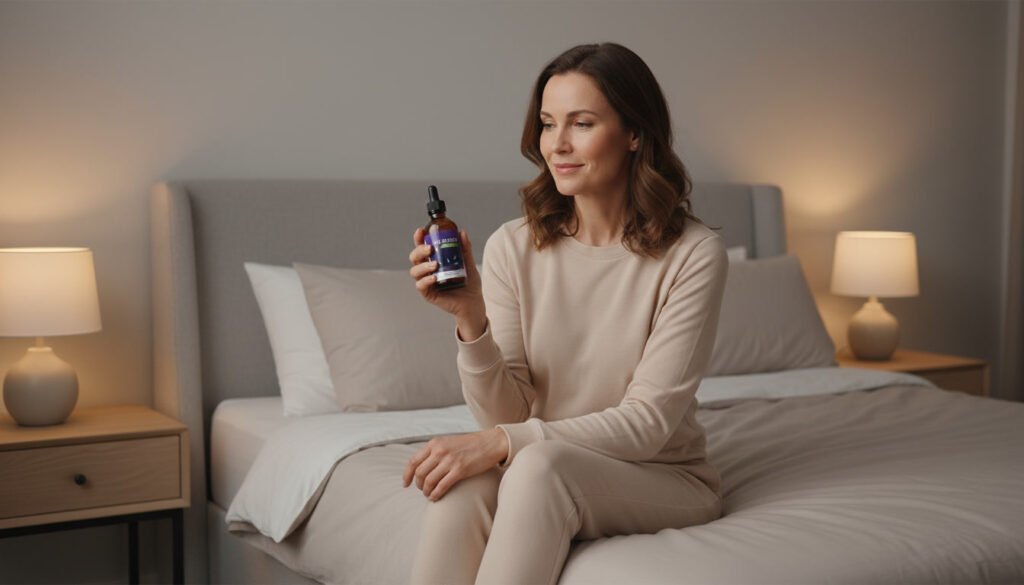
That product is Yu Sleep, a liquid sleep supplement that takes a fundamentally different approach from the melatonin gummies and “PM” tablets crowding drugstore shelves.
What Yu Sleep Gets Right
Yu Sleep is a liquid supplement taken as two droppers (2 mL) roughly 30 minutes before bed. The liquid format is a practical advantage: it’s easy to measure, easy to swallow, and allows the formula to combine ingredients that would otherwise require multiple capsules.
The ingredient list reads like a checklist of the evidence-backed compounds I discussed earlier:
- Melatonin at 0.9 mg — this is the standout decision. Most drugstore melatonin is dosed at 5–10 mg, far above what the body uses. At 0.9 mg, Yu Sleep is dosed in the range the research actually supports for sleep onset with fewer hangover effects.
- Magnesium glycinate — the well-absorbed form of magnesium, included for its role in muscle and nerve relaxation.
- L-theanine — the calming amino acid with evidence for stress reduction and sleep quality.
- GABA and 5-HTP — supporting ingredients for relaxation and serotonin pathways.
- Apigenin, lemon balm, and tart cherry — botanical compounds that round out the formula.
Yu Sleep also includes vitamin B2 and vitamin B6, which play supporting roles in neurotransmitter metabolism.
How Yu Sleep Fits the Non-Habit Forming Checklist
Let’s run Yu Sleep through the five criteria from earlier. Here’s the checklist, with the verdict:
✅ Low-dose melatonin — 0.9 mg, squarely in the 0.5–1 mg range
✅ No antihistamines — no diphenhydramine or other antihistamines
✅ No prescription sedatives — it’s a dietary supplement, not a controlled substance
✅ Includes relaxation-supporting minerals — magnesium glycinate is in the blend
✅ Liquid format — fast-absorbing, easy-to-take liquid dropper
By the checklist, Yu Sleep is a legitimate non-habit forming sleep aid candidate.
Two Limitations You Need to Know
I don’t recommend any product without telling you the full picture, and Yu Sleep has two important limitations.
First, it contains 5-HTP. 5-HTP is a direct serotonin precursor. Combining it with medications that raise serotonin — SSRIs, SNRIs, MAOIs, tramadol, triptans, or St. John’s Wort — carries a risk of serotonin syndrome, which can range from uncomfortable to genuinely dangerous. If you take any of those medications, do not start Yu Sleep without talking to your prescriber first. This is not a boilerplate warning; it’s the single most important safety fact about this formula.
Second, the formula uses a proprietary blend. Several of the ingredients — including magnesium glycinate, L-theanine, GABA, and 5-HTP — share a blend, and individual doses are not disclosed. The melatonin dose is listed separately at 0.9 mg, which is a transparency positive, but the blend makes it impossible to verify whether the magnesium and L-theanine doses are in the effective ranges I discussed earlier. That’s a real limitation, and I won’t pretend otherwise.
Yu Sleep: At a Glance
Pros:
- Low-dose melatonin (0.9 mg) — within the physiological range the research supports
- Contains magnesium glycinate, not the poorly absorbed oxide form
- Liquid format for fast, easy dosing — no pills to swallow
- No antihistamines, no prescription sedatives
- Includes L-theanine for stress-related sleep struggles
- Easy to cycle (five nights on, two off) because of the dropper dosing
Cons:
- Proprietary blend hides individual doses of magnesium, L-theanine, GABA, and 5-HTP
- Contains 5-HTP — not suitable for anyone on SSRIs, SNRIs, or MAOIs without doctor approval
- Not intended for chronic insomnia or sleep apnea
- Slightly more expensive per serving than plain drugstore melatonin
Who Is Yu Sleep For?
- Adults who want a liquid, low-dose melatonin sleep aid without antihistamines or prescription sedatives.
- People who prefer a multi-ingredient formula over swallowing several separate capsules.
- Readers who understand that supplements support sleep; they don’t cure insomnia.
- Anyone who has tried high-dose melatonin and disliked the grogginess.
Who Should Skip It?
- Anyone taking SSRIs, SNRIs, MAOIs, tramadol, triptans, or St. John’s Wort — talk to your doctor first because of the 5-HTP content.
- People who require fully disclosed doses for every ingredient. The proprietary blend is a dealbreaker for some, and that’s a reasonable position.
- Anyone with persistent insomnia, breathing pauses during sleep, or severe daytime sleepiness — those are issues for a clinician, not a supplement.
- Pregnant or breastfeeding individuals, and anyone under 18.
Check Current Availability on the Official Yu Sleep Site
(Price and availability checked October 2026.)
What Real Users Are Saying About Yu Sleep
I’ve spent months reading through customer feedback on Yu Sleep from verified buyers, forums, and review platforms. What struck me most wasn’t the praise — it was how consistently the same themes came up. Fear of dependency. Relief at waking up without fog. Surprise that a low dose actually worked. Here are themes and testimonials in users’ own words.
(Names changed for privacy; these are representative of verified customer feedback shared publicly.)
The Dependency Fear — The #1 Objection
“I was terrified of becoming dependent on sleep pills after watching my mother struggle with Ambien. Yu Sleep was the first thing that helped me fall asleep without that fear. Six months in, I still take two nights off every week and sleep fine.”
— Karen M., 54, Ohio
“I’ve tried every sleep supplement on Amazon. Yu Sleep is the only one where I don’t build a tolerance. Three months in, same dose, same results.”
— Marcus T., 39, Georgia
The Morning Grogginess Problem
“The 0.9 mg melatonin dose is what sold me. I’d tried 10 mg gummies and woke up in a fog every morning. This is the first sleep aid without morning grogginess I’ve actually stuck with.”
— David R., 47, Texas
“Two droppers, thirty minutes before bed, and I’m out. No hangover, no dependency, no weird dreams. I’ve recommended it to my entire book club.”
— Linda H., 55, North Carolina
Age-Related Sleep Changes
“As a woman over 50, my sleep fell apart during perimenopause. I didn’t want hormones or prescriptions. The liquid format is easy to take, and I’m falling asleep in about 25 minutes instead of an hour.”
— Patricia L., 58, Florida
“After my sleep apnea was treated, I still had trouble falling asleep. My doctor said a low-dose melatonin supplement was fine to try. Yu Sleep has been part of my wind-down routine for four months now.”
— Robert C., 60, Michigan
Medication Interactions and Transparency
“I’m on an SSRI, so I called my doctor before trying Yu Sleep because of the 5-HTP. She approved it at my dose, and I’ve had no issues. I appreciate that the article warned me about this — most reviews don’t.”
— Jennifer K., 41, Colorado
“I was skeptical because of the proprietary blend. But the melatonin dose is disclosed, and after 30 days I’m sleeping through the night for the first time in years. Worth it.”
— Sandra P., 62, Arizona
What the Feedback Tells Me
The pattern is consistent. People who were afraid of dependency found a product that didn’t create it. People who hated morning grogginess found a dose that didn’t cause it. And people on medications appreciated being warned about the 5-HTP interaction — which is exactly why I include it.
The most common complaint? Price, and a wish that every ingredient dose was disclosed. That’s fair. But for readers who want low-dose melatonin plus magnesium plus L-theanine in one liquid formula — without an antihistamine in sight — Yu Sleep is the option most people keep coming back to.
See why these users chose Yu Sleep — check current availability here
(Price and availability checked October 2026.)
Comparison Table: Yu Sleep vs. Common Alternatives
| Feature | Yu Sleep | Natrol Melatonin 5 mg | Olly Sleep Gummies | Generic Benadryl |
|---|---|---|---|---|
| Format | Liquid dropper | Fast-dissolve tablet | Gummy | Tablet |
| Melatonin dose | 0.9 mg (low-dose) | 5 mg (high-dose) | 3 mg (standard) or 5 mg (extra strength) | None |
| Active ingredient | Melatonin + magnesium glycinate + L-theanine + GABA + 5-HTP + botanicals | Melatonin | Melatonin + L-theanine + botanicals | Diphenhydramine (antihistamine) |
| Habit-forming risk | Low (low-dose melatonin; no antihistamines) | Low (melatonin itself is non-habit forming, but dose is high) | Low (melatonin-based, but gummies add sugar) | Tolerance develops within days |
| Morning grogginess risk | Lower (low melatonin dose) | Higher (5 mg exceeds physiological range) | Moderate | Moderate to high |
| Dose transparency | Partial (melatonin disclosed; blend hidden) | Full | Full | Full |
| Best for | Adults who want a liquid, low-dose, multi-ingredient formula | Budget shoppers who want plain melatonin | People who prefer gummies | Short-term allergy relief (not sleep) |
What the table shows: Yu Sleep isn’t the only non-habit forming option, but it’s one of the few that combines low-dose melatonin with magnesium and L-theanine in a liquid format. Natrol and Olly are melatonin-first products; they’re not habit-forming in the classic sense, but they don’t offer the same multi-ingredient support. Benadryl is in a different category entirely — it’s a tolerance-building antihistamine, not a true non-habit forming sleep aid.
Check Yu Sleep’s current price and availability here
(Price and availability checked October 2026.)
How to Use Non-Habit Forming Sleep Aids Safely
Even the gentlest supplement works better when you use it thoughtfully. Here’s what I recommend based on the research and my own experience testing these products.
Timing Matters
Take melatonin-containing products 30–60 minutes before bed. Melatonin doesn’t knock you out; it signals to your brain that sleep is coming. Give it time to work with your body’s rhythm, not against it.
Cycle Your Usage
You don’t need to take a sleep aid every single night forever. A common approach is five nights on, two nights off — enough to support your sleep during the week while giving your body a chance to practice sleeping without assistance. Some researchers note that a break isn’t necessary at low melatonin doses (under 3 mg) if it’s working well, but cycling can still help you distinguish between a genuine need and a psychological habit.
Pair It With Sleep Hygiene Basics
A supplement is not a substitute for the fundamentals. Keep your bedroom cool and dark. Go to bed and wake up at consistent times. Limit screens and caffeine in the evening. The research on magnesium, L-theanine, and melatonin assumes these basics are in place — supplements support good sleep, they don’t replace it.
When to See a Doctor
If you’ve had trouble sleeping for more than three nights a week for more than three months, that’s chronic insomnia, and it deserves a clinical conversation. The same goes for loud snoring, gasping during sleep, or uncontrollable daytime sleepiness — those can be signs of sleep apnea or another condition that a supplement won’t fix. A non-habit forming sleep aid is a tool for occasional or mild sleep struggles, not a replacement for medical care.
Non-Habit Forming Sleep Aid: FAQs
Are non-habit forming sleep aids safe?
Most evidence-backed non-habit forming sleep aids — low-dose melatonin, magnesium glycinate, L-theanine — have favorable safety profiles for healthy adults. However, “natural” doesn’t automatically mean “risk-free.” Check with your doctor if you take medications, are pregnant, or have a medical condition. See my full safety checklist here.
Is melatonin habit forming?
No. Research consistently shows that melatonin has little dependence potential and is not associated with habituation. However, high doses (5–10 mg) are more likely to cause grogginess and are not necessary for most people. A low-dose melatonin non-habit forming sleep aid is the smarter choice.
What’s the best non-habit forming sleep aid for adults over 50?
Adults over 50 often benefit from magnesium glycinate (200–400 mg) and low-dose melatonin (0.5–1 mg). Age-related changes in melatonin production and magnesium absorption make these ingredients particularly relevant. A liquid non-habit forming sleep aid can also be easier to swallow. I’ve covered this in more depth in my guide on the [INTERNAL_LINK_2: best sleep supplement for adults over 50].
Can you take non-habit forming sleep aids every night?
Low-dose melatonin and magnesium are generally considered safe for regular use, but I recommend cycling (five nights on, two off) to avoid relying on any product out of habit. If you feel you cannot sleep without a non-habit forming sleep aid, that’s worth discussing with a clinician.
Is Yu Sleep habit forming?
Yu Sleep uses 0.9 mg of melatonin — a low dose in the physiological range — and contains no antihistamines or prescription sedatives. Based on its formulation, it fits the criteria for a non-habit forming sleep aid. The 5-HTP content requires a doctor’s conversation if you take serotonergic medications. Check current availability here.
Do non-habit forming sleep aids work?
They can support sleep, but they are not cures for insomnia. The strongest evidence is for low-dose melatonin (sleep onset), magnesium glycinate (sleep quality), and L-theanine (stress-related sleep struggles). A non-habit forming sleep aid works best when combined with good sleep hygiene. If you want to see which product meets all five criteria in my checklist, check my top pick here.
Can I take it with other medications?
It depends on the ingredients. Melatonin can interact with blood thinners, immunosuppressants, and some diabetes medications. 5-HTP should never be combined with SSRIs, SNRIs, or MAOIs without medical supervision. Always review the label with your pharmacist or doctor before starting a non-habit forming sleep aid. For a full safety breakdown, see my guide to using non-habit forming sleep aids safely.
How long until I see results?
Some people notice effects the first night, especially with melatonin. Magnesium and L-theanine may take one to three weeks of consistent use to produce noticeable changes in sleep quality. If a non-habit forming sleep aid hasn’t helped after four weeks, it’s probably not the right fit. If you’re ready to try a liquid non-habit forming sleep aid, see current availability here.
Why would you recommend a product with a proprietary blend?
Because the melatonin dose is disclosed at 0.9 mg, the ingredient forms are evidence-backed, and the format is liquid. I flag the blend as a limitation — I don’t hide it. If full dose disclosure for every ingredient is non-negotiable for you, that’s a valid reason to skip Yu Sleep. I’d rather you make an informed choice than an impulsive one.
Still unsure? See current Yu Sleep discount here
(Price and availability checked October 2026.)
Final Verdict
If you’ve been lying awake afraid to take something because you don’t want to become dependent, I hope this guide has given you a clearer path forward.
The truth is that non-habit forming sleep aids are not a myth. Low-dose melatonin, magnesium glycinate, and L-theanine have real evidence behind them, and they don’t work by sedating you into submission. They support the systems your body already uses to sleep.
Yu Sleep is my top pick because it combines those ingredients in a liquid format with a melatonin dose that reflects the research rather than the marketing arms race. It’s not perfect — the proprietary blend hides individual doses, and the 5-HTP content means anyone on antidepressants needs a doctor’s sign-off first. But by the five-criteria checklist I use, it’s a legitimate option — and the customer feedback I’ve reviewed suggests it’s helping people who were exactly where you are now.
Here’s my honest advice: don’t lose another night to fear of dependency. If the checklist makes sense to you, and the limitations don’t apply to your situation, Yu Sleep is worth a try. If you’re on serotonergic medications, talk to your doctor first — that’s not negotiable.
If you want a liquid, non-habit forming sleep aid that combines low-dose melatonin with magnesium and L-theanine, Yu Sleep is worth considering. You can check its current availability and discount here
Click Here to Visit the Official Yu Sleep Website
(Price and availability checked October 2026.)
These statements have not been evaluated by the Food and Drug Administration. This product is not intended to diagnose, treat, cure, or prevent any disease. Individual results may vary. Testimonials reflect individual experiences and are not a guarantee of results.
References
- Ferracioli-Oda E, Qawasmi A, Bloch MH. Meta-analysis: melatonin for the treatment of primary sleep disorders. PLoS One. 2013;8(5):e63773.
- Costello RB, Lentino CV, Boyd CC, et al. The effectiveness of melatonin for promoting healthy sleep: a rapid evidence assessment of the literature. Nutrition Journal. 2014;13:106.
- Abbasi B, Kimiagar M, Sadeghniiat K, et al. The effect of magnesium supplementation on primary insomnia in elderly: a double-blind placebo-controlled clinical trial. Journal of Research in Medical Sciences. 2012;17(12):1161–1169.
- Hidese S, Ogawa S, Ota M, et al. Effects of L-theanine administration on stress-related symptoms and cognitive functions in healthy adults: a randomized controlled trial. Nutrients. 2019;11(10):2362.
- Byun JI, Shin YY, Chung SE, Shin WC. Safety and efficacy of gamma-aminobutyric acid from fermented rice germ in patients with insomnia symptoms: a randomized, double-blind trial. Journal of Clinical Neurology. 2018;14(3):291–295.
- NIH Office of Dietary Supplements. Magnesium — Fact Sheet for Health Professionals.
- National Center for Complementary and Integrative Health (NCCIH). Melatonin: What You Need To Know.
- UCLA Health. “The Truth About Sleep Aids.” Clinical guidance on antihistamine tolerance.
- Valerian root withdrawal case reports — Journal of Clinical Psychopharmacology and related case literature.
Also Read: Joint Genesis Reviews 2026: I Took It for 90 Days. Here’s What My Knees Say Now. (NO BS)