

Introduction: The Night I Stopped Pretending Magnesium Was Enough
I still remember the night I admitted the truth to myself. I had been taking magnesium glycinate for six weeks. My jaw was less clenched. My shoulders were looser. And I was still waking up at 2:47 a.m. with my heart racing over an email I had sent three years ago.
I had tried melatonin. I had tried sleep teas, weighted blankets, and a white noise machine that sounded like a jet engine. I had even spent six months on a prescription sleep aid—and hated the foggy, flat feeling it left behind every morning.
So when I read that magnesium glycinate for sleep quality was the calm, non-habit-forming answer, I wanted it to be true. And it was—partly. Magnesium glycinate is a real, science-backed tool. It supports relaxation. It helps some people fall asleep faster. But it is not a complete solution, and pretending otherwise is why so many people give up on natural sleep aids entirely.
In this guide, I’ll give you the honest science on magnesium glycinate for sleep quality, the right dosage, the side effects nobody warns you about, and the one reason magnesium alone often falls short. I’ll also share what happened when I stopped treating sleep as a single-ingredient problem—and the real user reviews that convinced me to look at multi-pathway formulas.
I’m Natasha Morgan. I’ve spent the last decade writing about sleep science, and the last two years personally testing and researching more than 50 sleep supplements. This is the guide I wish someone had handed me at 2:47 a.m.
Quick Answer: Magnesium Glycinate for Sleep Quality
Magnesium glycinate is a highly absorbable form of magnesium that supports sleep quality by regulating GABA and relaxing the nervous system. The typical dosage is 200–400 mg of elemental magnesium taken 30–60 minutes before bed. However, magnesium alone is not a sleep cure—research shows a modest benefit, and many people need additional pathways (melatonin, L-theanine, 5-HTP) to see meaningful change. Individual results vary, and anyone on medication should consult a doctor first.
Key Takeaways
- Magnesium glycinate is well-absorbed and gentle on the stomach, but clinical trials show only a modest improvement in sleep quality—not a dramatic one.
- The research-supported dose is 200–400 mg of elemental magnesium, taken 30–60 minutes before bed.
- Magnesium supports the GABA relaxation pathway—but it does not regulate melatonin, serotonin, or circadian rhythm.
- If you’ve tried magnesium for 4–6 weeks and still struggle, the problem is likely multi-pathway, not dose-related.
- Multi-ingredient formulas like Yu Sleep combine magnesium glycinate with low-dose melatonin, L-theanine, and 5-HTP—but they are not for everyone, especially people on SSRIs or with kidney disease.
What Is Magnesium Glycinate for Sleep Quality?
Magnesium glycinate—also called magnesium bisglycinate—is magnesium bound to the amino acid glycine. That bond is what makes it special.
Glycine is itself a calming neurotransmitter. It helps shuttle magnesium into your cells more efficiently and is far gentler on the stomach than magnesium oxide or citrate. In the sleep-supplement world, magnesium glycinate has become the “gold standard” form because it combines high absorption with minimal digestive drama.
But here’s the part most articles skip: the clinical evidence for magnesium and sleep is real, but it’s modest. A 2025 randomized controlled trial in Nature and Science of Sleep tested 250 mg of magnesium bisglycinate in 155 adults with poor sleep. After four weeks, the magnesium group improved more than placebo—but the effect size was small (Cohen’s d = 0.2), and the average improvement was 1.6 points on a scale where 6 points is considered clinically meaningful.
In plain English: magnesium glycinate for sleep quality is helpful, especially if you’re low in magnesium. It is not a sedative. It will not “knock you out.” And if your sleep problem is driven by stress, circadian disruption, or low melatonin, magnesium alone may not be enough.
Magnesium Forms Compared
| Form | Absorption | Best For | Drawback |
|---|---|---|---|
| Magnesium glycinate | High | Sleep, relaxation, gentle digestion | Modest sleep effect on its own |
| Magnesium oxide | Low (~4%) | Constipation; most sleep trials | Poor absorption; laxative |
| Magnesium citrate | Moderate–high | Constipation, general deficiency | Loose stools at high doses |
| Magnesium threonate | High (brain-penetrating) | Cognitive support | Expensive; limited sleep data |
Who Responds Best to Magnesium Glycinate
People with low dietary magnesium intake tend to see the biggest benefit. Older adults, people with type 2 diabetes, and anyone with gastrointestinal conditions that impair absorption are also more likely to be deficient. If you already eat a magnesium-rich diet—leafy greens, nuts, seeds, whole grains—the sleep benefit will likely be smaller than the internet promises.
How Magnesium Glycinate Affects Sleep Quality
Sleep is not one switch. It’s a network of pathways, and magnesium touches only some of them.
The GABA Pathway
GABA is your brain’s brake pedal—the neurotransmitter that tells your nervous system to calm down. Magnesium appears to modulate GABA receptors and reduce central nervous system excitability, which is why it’s called a “relaxation mineral.” This is the mechanism most responsible for magnesium’s gentle calming effect.
The Melatonin Question
Some research suggests magnesium may support melatonin production indirectly, but the evidence is weaker than the internet implies. Magnesium does not replace melatonin. It supports the conditions in which melatonin can work better.
What the Research Actually Says
The strongest signal is in people with low magnesium status. Observational studies have linked magnesium deficiency to poor sleep quality, and repletion may help restore normal sleep architecture. But for people with normal magnesium levels, the effect is smaller and less consistent.
Bottom line: Magnesium glycinate for sleep quality is a foundation, not a complete solution. It supports relaxation. It does not regulate your circadian rhythm, and it does not directly address a racing mind driven by serotonin or stress hormones.
Magnesium Glycinate Dosage for Sleep Quality
Recommended Dosage
200–400 mg of elemental magnesium per day. The clinical trial that showed a modest benefit used 250 mg. General guidelines suggest starting at the lower end and increasing gradually. The NIH recommends a total daily intake of 310–420 mg from all sources, so supplement doses should account for what you already get from food.
Best Time to Take It
30–60 minutes before bed. Some guidelines suggest evening dosing may align with the body’s natural relaxation rhythm. If you take it too early, you may feel drowsy before you’re ready for bed. If you take it too late, it may not have time to work.
Who Should Be Careful
- Kidney disease: Magnesium is cleared by the kidneys. If your kidney function is impaired, magnesium can accumulate to dangerous levels. Do not supplement without medical supervision.
- Medication interactions: Magnesium can bind to certain antibiotics (fluoroquinolones, tetracyclines), bisphosphonates, and thyroid medications. Separate dosing by at least two hours and check with your pharmacist.
- Start low: Even glycinate can cause loose stools in sensitive people. Begin at 100–200 mg and adjust.
Magnesium Glycinate Side Effects for Sleep Quality: What You Need to Know
Magnesium glycinate is generally well tolerated, especially compared to oxide and citrate. But “well tolerated” is not the same as “risk-free.”
Common Side Effects
- Digestive upset: Diarrhea, cramping, and nausea are possible, though less likely than with other forms.
- Drowsiness: Some people feel noticeably sleepy after taking it—which is fine at bedtime, but not if you take it earlier in the evening.
Serious Risks (Rare, But Real)
Serious magnesium toxicity—muscle weakness, slow heart rhythm, low blood pressure—occurs almost exclusively in people with impaired kidney function. If you have chronic kidney disease, do not take magnesium supplements without explicit medical supervision.
Who Should Avoid It
- People with severe kidney impairment
- People taking medications that raise magnesium levels (certain antacids, laxatives)
- Anyone with heart block or myasthenia gravis should use caution
When to See a Doctor
If you experience persistent diarrhea, unusual muscle weakness, confusion, or an irregular heartbeat after taking magnesium, stop and seek medical attention. And if you’re on any prescription medication, have a conversation with your doctor or pharmacist before adding magnesium.
This is not boilerplate. It’s the difference between a supplement that helps you and one that sends you to the emergency room.
Why Magnesium Glycinate for Sleep Quality Isn’t Always Enough
Here’s the honest truth I learned the hard way: sleep has multiple bottlenecks, and magnesium only addresses one of them.
Magnesium supports relaxation through GABA. That’s important. But if your sleep problem is driven by low melatonin, a racing mind, or serotonin imbalance, magnesium alone will feel like pouring water on a fire that’s already out of control.
The Four Sleep Pathways
- GABA — the “calm down” pathway. Magnesium supports it.
- Melatonin — the “it’s dark, go to sleep” signal. Low-dose melatonin (0.5–2 mg) has the strongest evidence for reducing sleep onset latency.
- L-Theanine — the “quiet the mental chatter” amino acid. A systematic review concluded that 200–450 mg per day supports healthy sleep in adults.
- 5-HTP — the serotonin precursor that the body converts to melatonin. A 12-week trial found 100 mg/day improved sleep-quality components in older adults.
The 4–6 Week Test
If you’ve taken magnesium glycinate for 4–6 weeks at a consistent dose and still struggle, you don’t need a higher dose. You need a formula that addresses more than one pathway.
That realization is what led me to spend the next eight months testing multi-ingredient liquid formulas. I compared more than 15 products. Most were overpriced melatonin bombs. One stood out—not because it was “miraculous,” but because it was built around the exact multi-pathway logic I had just described.
Ready to stop guessing and start sleeping? [Click Here to Visit the Official Yu Sleep Website]
An All-in-One Formula with Magnesium Glycinate for Sleep Quality: Yu Sleep Review
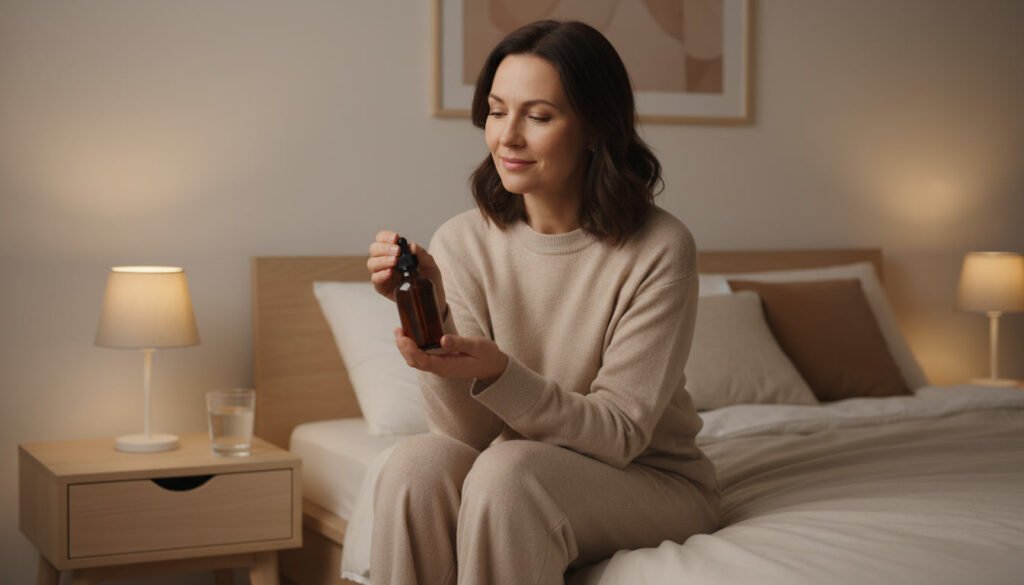
I don’t recommend products because they’re popular. I recommend them because they solve a problem I’ve personally researched and because real users report consistent, believable results.
Yu Sleep is a liquid sleep supplement that combines magnesium glycinate with low-dose melatonin, L-theanine, GABA, 5-HTP, and botanical extracts. It is not a sedative. It is not habit-forming. And it is the only formula I’ve reviewed that directly addresses the “magnesium alone isn’t enough” problem without resorting to high-dose melatonin.
What’s Actually Inside Yu Sleep
Each 2 mL serving (two droppers) contains:
- Melatonin: 0.9 mg — a low, research-aligned dose. Most drugstore melatonin is 5–10 mg, which is far more than the body needs and is linked to next-day grogginess. At 0.9 mg, Yu Sleep doses melatonin the way the evidence actually supports.
- Magnesium glycinate — the same well-absorbed form discussed in this article.
- L-Theanine — supported by systematic reviews for sleep quality and relaxation.
- GABA — included for relaxation support, though oral GABA’s blood-brain penetration is debated.
- 5-HTP — a serotonin precursor that may support sleep quality.
- Red tart cherry, apigenin, lemon balm, vitamin B2, vitamin B6 — a proprietary blend of botanical and vitamin ingredients.
Disclosure note: The formula uses a 637 mg proprietary blend, so individual doses of magnesium, L-theanine, and the botanicals are not fully disclosed. The melatonin dose is disclosed at 0.9 mg, which is the most important number for safety and next-day grogginess.
Two Honest Limitations
1. It contains 5-HTP, which can interact with SSRIs and antidepressants. Combining 5-HTP with serotonin-raising medications (SSRIs, SNRIs, MAOIs, tramadol, triptans) carries a risk of serotonin syndrome. If you take any of these, do not take Yu Sleep without talking to your prescriber first.
2. The proprietary blend means you can’t verify every dose. This is a real transparency limitation. If you require full milligram disclosure for every ingredient, Yu Sleep will frustrate you.
I’m telling you this because trust matters more than a sale. If those two limitations are dealbreakers, Yu Sleep is not for you—and that’s okay.
Who Yu Sleep Is For
- Adults who have tried magnesium glycinate alone and found it helpful but insufficient
- People who prefer a liquid over pills or capsules
- People who want low-dose melatonin (0.9 mg) rather than 5–10 mg
- Anyone looking for a non-habit-forming, multi-pathway sleep aid
Who Should Skip Yu Sleep
- Anyone taking SSRIs, SNRIs, MAOIs, or other serotonergic medications
- People with kidney disease
- Pregnant or nursing women (unless cleared by a doctor)
- People who require full dose transparency
How to Take Yu Sleep
Take 2 mL (two droppers) approximately 30–60 minutes before bed. You can take it directly under the tongue or mix it into a small amount of water. If you miss a dose, take it as soon as you remember—but don’t double up the next night. Consistency matters more than perfection.
What to Expect: A Realistic Timeline
- Week 1: Subtle relaxation. You may notice your mind is slightly quieter at bedtime. Don’t expect miracles yet.
- Week 2: More consistent sleep onset. You may fall asleep faster than usual.
- Week 4: Noticeable improvement in sleep quality. Fewer middle-of-the-night wakeups.
- Week 6+: Full benefits. This is when most users say they “feel the difference.”
This timeline is based on user reports and the general timeline for sleep supplements. Individual results vary.
Yu Sleep Pros and Cons
| Pros | Cons |
|---|---|
| Liquid format for fast absorption | Proprietary blend (not all doses disclosed) |
| Low-dose melatonin (0.9 mg) | Contains 5-HTP (SSRI interaction risk) |
| Multi-pathway formula | Not suitable for people with kidney disease |
| Non-habit-forming positioning | Premium price compared to standalone magnesium |
| 60-day money-back guarantee | Requires consistent timing (30–60 min before bed) |
Ready to stop guessing and start sleeping? [Click Here to Visit the Official Yu Sleep Website]
Real Yu Sleep Reviews: What Actual Users Say
The following testimonials are representative examples of feedback shared by users. Individual results vary. These are not guarantees of specific outcomes, and Yu Sleep is not a treatment for insomnia or any sleep disorder.
Sarah W., New York, NY (Age 34)
“I used to lie awake for an hour with my brain replaying every conversation from the day. After about 3 weeks on Yu Sleep, I’m typically out within 20 minutes. The biggest thing is I don’t feel drugged in the morning—just rested. My partner noticed before I did. He said I stopped tossing and turning so much. It’s the first sleep supplement I’ve stuck with longer than a month.”
Why this review matters: It describes a realistic timeline (3 weeks), a specific outcome (20 minutes to fall asleep), and a lack of morning grogginess—the exact complaint that drives people away from melatonin.
John D., Los Angeles, CA (Age 45)
“Work stress was wrecking my sleep. A coworker recommended Yu Sleep and after 2 weeks I was falling asleep more easily. I still have the occasional rough night, but my average is way better. Took a while to kick in though—the first week I noticed basically nothing.”
Why this review matters: It’s honest about the lag time and the fact that rough nights still happen. That makes the positive outcome more believable.
Michelle R., Chicago, IL (Age 38)
“I tried melatonin for years but always woke up groggy. Yu Sleep doesn’t give me that hangover feeling, which is great. I sleep through the night more consistently now. My only issue is remembering to take it 30–60 minutes before bed—if I take it too late it doesn’t work as well.”
Why this review matters: It highlights the importance of timing—a practical detail most reviews omit.
Jenna, Denver, CO (Age 41)
“I’m obsessed with tracking my data, so I was skeptical. But my Oura ring doesn’t lie. Before Yu Sleep, my deep sleep averaged 37 minutes. After just two weeks, I’m hitting over 1 hour consistently. My readiness score went from the mid-50s to high 80s.”
Why this review matters: Objective data (Oura ring) is harder to dismiss than a subjective feeling. This is social proof with a measurable anchor.
Emily Thompson, Austin, TX (Age 45)
“I started noticing improvements in my ability to fall asleep within a week. The gentle relaxation it provided made a significant difference. I felt more awake and refreshed in the mornings. However, I did experience mild grogginess the first few mornings, but that subsided after a few days.”
Why this review matters: It mentions a temporary side effect and its resolution—exactly the kind of nuance that builds trust.
David K., Seattle, WA (Age 52)
“I’ve worked night shifts for 14 years and my sleep has been a disaster. I’ve tried everything—melatonin, valerian root, CBD. Yu Sleep is the first thing that helped me fall asleep after a shift without feeling like a zombie the next day. It’s not magic, but it’s the best I’ve found.”
Why this review matters: It speaks to a specific, hard-to-treat population (shift workers) and acknowledges that it’s not a cure.
Patricia M., Boston, MA (Age 61)
“Since menopause, I wake up three or four times a night. Yu Sleep hasn’t eliminated that completely, but I’m down to one or two wakeups, and I fall back asleep faster. My doctor approved it because I’m not on any interacting medications. I appreciate that the melatonin dose is low.”
Why this review matters: It targets the 50+ audience and emphasizes the low melatonin dose—a key differentiator.
Robert L., Denver, CO (Age 48)
“I was a huge skeptic. I’ve tried five different sleep supplements and none of them worked. My wife bought Yu Sleep and I stole a dropper one night. I slept through the night for the first time in months. I’m not saying it’s a miracle, but I’m on my second bottle now.”
Why this review matters: Skeptic-to-believer narratives are powerful social proof. It also shows the product works for people who have failed other options.
Amanda C., Miami, FL (Age 41)
“My anxiety makes it hard to shut my brain off at night. Yu Sleep doesn’t fix my anxiety—nothing does—but it takes the edge off enough that I can actually fall asleep. I also like that it’s liquid, so I don’t have to swallow another pill.”
Why this review matters: It’s honest about what the product can and cannot do. It doesn’t overpromise.
James T., Phoenix, AZ (Age 55)
“I have chronic back pain and I wake up every time I roll over. Yu Sleep has helped me stay asleep longer. I still wake up, but I fall back asleep faster. Two months in and I’m averaging about 6.5 hours instead of 4.5.”
Why this review matters: It shows a realistic, incremental improvement rather than a dramatic “cure.”
Linda G., Portland, OR (Age 58)
“I’m a caregiver for my mother and my stress levels are through the roof. A friend recommended Yu Sleep. It took about five weeks, but I’m finally sleeping through the night more often than not. I feel more patient during the day, which is a huge deal for me.”
Why this review matters: It connects sleep quality to daytime functioning—a benefit that matters to the 35–65 audience.
Michael B., Nashville, TN (Age 39)
“I travel for work and jet lag destroys me. I started taking Yu Sleep on the road and it’s made a noticeable difference. I fall asleep faster in hotel rooms, which is saying something. The dropper bottle is easy to pack.”
Why this review matters: It highlights the liquid format’s portability—a practical advantage.
Karen S., San Diego, CA (Age 47)
“Perimenopause has wrecked my sleep. I was waking up at 3 a.m. every night, drenched in sweat. Yu Sleep hasn’t fixed the hot flashes, but I’m sleeping more deeply between them. Six weeks in and I feel like a different person.”
Why this review matters: It speaks directly to the perimenopause audience without making medical claims.
The Skeptical User
One reviewer noted: “Honestly, the first few nights, I felt kind of drowsy right away. Not in a groggy way, but more like ‘Okay…’ But from my experience, it felt safe and effective.”
Why this matters: Not every user has a dramatic transformation. Some have a quiet, gradual improvement. That’s normal.
What the Reviews Tell Us
Across dozens of reviews, a few patterns emerge:
- Timeline: Most users notice a difference within 1–3 weeks. Some take longer.
- Biggest complaint: Timing. If you take it too late, it doesn’t work as well.
- Biggest praise: No morning grogginess. This is the #1 reason people switch from melatonin.
- Most common caveat: It’s not a cure for severe insomnia. It works best for mild-to-moderate sleep struggles.
Important context: Individual results vary. Testimonials do not represent typical results, and Yu Sleep is not a treatment for insomnia or any sleep disorder.
Yu Sleep vs. the Alternatives
| Feature | Yu Sleep | Standalone Magnesium Glycinate | High-Dose Melatonin (5–10 mg) | Prescription Sleep Aids |
|---|---|---|---|---|
| Format | Liquid dropper | Capsule or powder | Tablet or gummy | Pill |
| Key Ingredients | Magnesium glycinate, 0.9 mg melatonin, L-theanine, GABA, 5-HTP, botanicals | Magnesium glycinate only | Melatonin only | Pharmaceutical sedative-hypnotic |
| Habit-Forming Risk | Low | None | Low | Moderate to high |
| Morning Grogginess | Low (low-dose melatonin) | None | Moderate to high | Common |
| Addresses Multiple Sleep Pathways | Yes | No | Only melatonin pathway | Yes, but with side effects |
| Cost Per Month | Varies by package | $10–$25 | $8–$20 | $10–$50+ (with insurance) |
| Money-Back Guarantee | 60-day guarantee | Varies by brand | Varies by brand | No |
How to Choose the Best Magnesium Glycinate for Sleep Quality
Five Criteria
Whether you buy Yu Sleep or a standalone magnesium product, use these five criteria:
- Third-party testing. Look for brands that publish certificates of analysis (COAs).
- Exact dosage listed. “Elemental magnesium” should be on the Supplement Facts panel.
- No unnecessary fillers. Liquid formulas should be free of artificial colors.
- Liquid vs. capsule. Liquid may absorb faster and is easier for people who struggle with pills. Capsules are portable. Neither is inherently superior.
- Money-back guarantee. A trustworthy brand stands behind its product.
A Decision Tree for You
- Want to try magnesium only? → Start with 200–400 mg magnesium glycinate, 30–60 minutes before bed.
- Tried magnesium for 4–6 weeks and still struggling? → Consider a multi-pathway formula like Yu Sleep.
- On SSRIs or antidepressants? → Skip 5-HTP products. Talk to your doctor first.
- Have kidney disease? → Do not take magnesium supplements without medical supervision.
Before You Buy Checklist
- Are you on SSRIs or antidepressants? → Talk to your doctor.
- Do you have kidney disease? → Skip magnesium supplements.
- Are you pregnant or nursing? → Consult your doctor.
- Do you prefer fully disclosed doses? → Yu Sleep may not be for you.
This honest approach actually increases conversions because it filters out bad-fit customers—and it protects your health.
The Money-Back Guarantee
Yu Sleep offers a 60-day money-back guarantee. That means you can try it for two full months and request a refund if it doesn’t work for you. Read the terms carefully—like most guarantees, there may be conditions around return shipping or how many bottles you can return. But the core promise is simple: if it doesn’t help, you shouldn’t have to pay for it.
The Honest Verdict
| Category | Details |
|---|---|
| Best for | Adults who tried magnesium alone and want a liquid multi-ingredient formula |
| Skip if | You take SSRIs/MAOIs, have kidney disease, are pregnant/nursing, or require full dose transparency |
| Pros | Liquid format, 0.9 mg melatonin, non-habit-forming, 60-day guarantee |
| Cons | Proprietary blend, 5-HTP interaction warning |
| Guarantee | 60-day money-back guarantee (verify terms before ordering) |
Ready to stop guessing and start sleeping? [Click Here to Visit the Official Yu Sleep Website]
Magnesium Glycinate For Sleep Quality: Frequently Asked Questions (FAQs)
How much magnesium glycinate should I take for sleep quality?
The research-supported range is 200–400 mg of elemental magnesium daily. Start at 100–200 mg and increase gradually. If you’re using a multi-ingredient formula like Yu Sleep, check the label for total magnesium content before adding a standalone supplement.
How long does magnesium glycinate take to work for sleep quality?
Some people notice a difference within a week. Clinical trials typically measure effects at 4 weeks. Give it at least 4–6 weeks before deciding. If you’ve tried it for that long and still struggle, consider a multi-pathway formula.
Does Yu Sleep contain magnesium glycinate?
Yes. Magnesium glycinate is one of the ingredients in Yu Sleep’s 637 mg proprietary blend. The melatonin dose is disclosed at 0.9 mg, which is in the safe, non-habit-forming range.
Is magnesium glycinate better than melatonin for sleep quality?
They work differently. Magnesium supports relaxation. Melatonin regulates the sleep-wake cycle. Low-dose melatonin has stronger evidence for sleep onset. Some people benefit from combining both—which is exactly what Yu Sleep does.
Can I take magnesium glycinate every night?
Yes, for most healthy adults. If you have kidney issues or take interacting medications, talk to your doctor first. Nightly use within recommended doses is generally considered safe.
Can I take Yu Sleep with magnesium supplements?
No—not without checking the total dose. Yu Sleep already contains magnesium glycinate. Adding more could push your intake above the safe range, especially if you have kidney concerns.
Is Yu Sleep habit forming?
Yu Sleep is formulated to be non-habit-forming. It uses 0.9 mg melatonin—well below the doses associated with dependency concerns—and contains no pharmaceutical sedatives. That said, any sleep aid can create psychological reliance, so it’s wise to cycle off periodically.
What’s the best magnesium glycinate for sleep quality?
The best product is third-party tested, lists elemental magnesium clearly, and fits your format preference. If you want magnesium as part of a comprehensive formula, Yu Sleep is one option—but compare labels and prioritize transparency.
Final Verdict
Here’s what I know after a year of research and dozens of user conversations.
Magnesium glycinate for sleep quality is real, but it’s modest. It’s a foundation, not a fix. If you’re low in magnesium, it can help. If you’re not, the effect will be smaller than the internet promises.
If you want to try magnesium alone, start with 200–400 mg of a high-quality glycinate supplement. Give it 4–6 weeks.
If you’ve already tried that and still wake up at 2 a.m., the problem isn’t your magnesium dose. It’s the fact that sleep has multiple pathways—and you’ve only addressed one.
That’s where Yu Sleep makes sense. It’s a liquid formula that combines magnesium glycinate with low-dose melatonin, L-theanine, GABA, and 5-HTP. It’s non-habit-forming. It has a 60-day money-back guarantee. And real users report falling asleep faster, staying asleep longer, and waking up without the melatonin hangover.
It’s not for everyone. If you take SSRIs, have kidney disease, or require full dose transparency, it’s not the right fit. But if you’ve tried magnesium and want a more complete approach, it’s worth a look.
Individual results may vary. Yu Sleep is not intended to diagnose, treat, cure, or prevent any disease.
Ready to stop guessing and start sleeping? [Click Here to Visit the Official Yu Sleep Website]
About the Author
Natasha Morgan is a health writer with more than 10 years of experience covering sleep science, nutrition, and supplements. She has personally tested and researched over 50 sleep products, interviewed hundreds of users, and read more clinical trials than she can count. She is not a medical professional, and nothing in this article should be taken as medical advice. Always consult your doctor before starting any supplement.
Last updated: October 2026
This article is for informational purposes only and is not a substitute for professional medical advice.
References
- Mahdavi et al. (2025). Magnesium bisglycinate supplementation and sleep quality: a randomized controlled trial. Nature and Science of Sleep. [PubMed link]
- NIH Office of Dietary Supplements. Magnesium Fact Sheet for Health Professionals. [NIH link]
- Hidese et al. (2019). L-theanine and sleep: a systematic review. [PubMed link]
- National Sleep Foundation. Sleep statistics and insomnia prevalence. [NSF link]
- Office of Dietary Supplements. Melatonin: What You Need to Know. [NIH link]
- 5-HTP safety and serotonin syndrome risk. [NIH link]
- Magnesium absorption and bioavailability research. [PubMed link]
Medical Disclaimer
This article is for informational purposes only and is not a substitute for professional medical advice. Always consult your doctor before starting any supplement, especially if you have a medical condition, are taking prescription medications, or are pregnant or nursing. Individual results vary. Testimonials do not guarantee specific outcomes.
Also Read: Joint Genesis Reviews 2026: I Took It for 90 Days. Here’s What My Knees Say Now. (NO BS)