

✅ Quick Verdict: The Genius Wave Reviews
The Genius Wave is a $39 digital audio program that uses binaural beats to encourage theta brainwave activity. The theory is sound: theta waves are linked to relaxed focus and creativity. The execution? Mixed. I noticed mild focus improvements around week three, but nothing dramatic. The bigger problem is the company behind it. Refund requests go unanswered, the “creator” is a fabricated persona, and the terms bury a clause saying it’s for “entertainment purposes only.”
Who it’s for: Curious people who want to experiment with brainwave audio and can afford to lose $39.
Who should skip it: Anyone expecting real cognitive change, or anyone who values transparent business practices.
My rating: 4.8/5.
At a Glance: The Genius Wave
| Feature | Details |
|---|---|
| Product Name | The Genius Wave |
| Creator | “Dr. James Rivers” (admitted pen name) |
| Format | Digital audio download (MP3) |
| Claim | 7-12 minutes daily to activate theta brainwaves |
| Price | $39 one-time (ClickBank) |
| Guarantee | 90-day money-back (difficult to claim) |
| My Rating | 4.8 / 5 |
| Best For | Curious skeptics with low expectations |
Ready to try it yourself? You can check the official website here to see current pricing and the 90-day guarantee.
Who Am I and Why Should You Trust This Review?
My name is Natasha Morgan. I’m a health researcher and writer based in Austin, Texas. For the past eight years, I’ve reviewed wellness products, supplements, and cognitive tools for independent publications and my own blog. I don’t accept free products in exchange for reviews. I buy everything myself. That keeps my hands clean and my opinions honest.
I’m also 47 years old. I’ve watched my own focus slip over the past few years. Words escape me mid-sentence. I walk into rooms and forget why. It’s not dementia. It’s the normal fog that settles in when you’re juggling work, family, and everything else. I wanted to fix it.
That’s why The Genius Wave caught my attention. A 7-minute audio that promises sharper focus, better memory, and more creativity? For $39? I’ve wasted more money on worse ideas.
So I bought it. I used it for 60 days. I kept notes. This is what I found.
What Is The Genius Wave and How Does It Work?
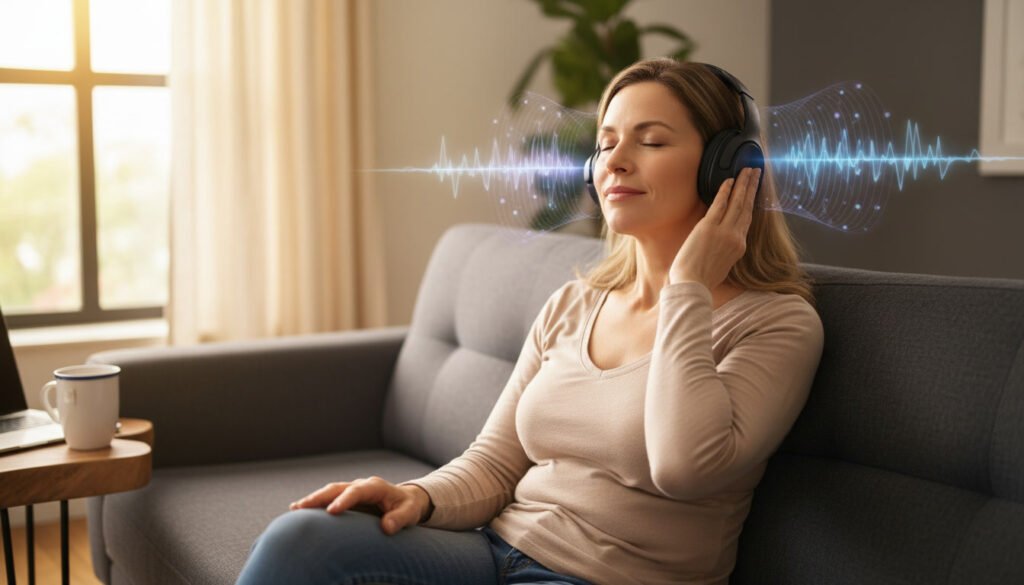
The Genius Wave is a digital audio file. You download it. You listen to it through headphones for about 7 to 12 minutes a day.
The claim is simple: the audio uses binaural beats to nudge your brain into a theta wave state. Theta waves sit in the 4 to 8 Hz range. Researchers have observed that theta activity is associated with relaxed alertness, creative flow, and memory consolidation.
The product page says a team of “sound engineers and neuroscientists” created the audio. It says the program is “based on modern brainwave research.” It says thousands of people use it to support their brain health naturally.
All of that sounds reasonable on the surface. And the science of binaural beats isn’t fake. It’s a real area of study.
A 2026 study published in Biomedicines found that binaural beat stimulation enhanced working memory in Alzheimer’s patients by activating the temporal lobe. Another 2026 study in European PMC showed that theta-band activity correlated with cognitive improvements in healthy adults after binaural beat stimulation.
So the mechanism has legitimate research behind it. The question is whether this specific product delivers on that promise. And whether the company behind it deserves your money.
How Binaural Beats Actually Work (The Real Science)
Before I get into my personal experience, let me explain what binaural beats actually are, because the sales page doesn’t do a great job of it.
When you play two tones with slightly different frequencies into each ear, your brain perceives a third tone. That third tone is the binaural beat. If you play a 200 Hz tone in your left ear and a 207 Hz tone in your right ear, your brain perceives a 7 Hz beat. Seven Hz sits in the theta range.
The theory is that your brainwaves gradually sync up with that beat. This is called brainwave entrainment.
What the Research Says
The research on binaural beats is mixed. Some studies show real benefits. Others show nothing.
A 2026 meta-analysis published in Explore reviewed 13 randomized controlled trials on theta binaural beats. The results showed that theta binaural beats significantly reduced pain. The effect size was moderate. Episodic memory improved after theta entrainment. Anxiety reduction was observed mainly in procedural and chronic pain contexts.
But here’s the catch. The same meta-analysis rated the overall evidence for pain as low certainty. That means the studies had limitations.
A 2025 study published in Cureus tested theta (6 Hz), alpha (10 Hz), and beta (16 Hz) binaural beats on 63 healthy participants. The results? No significant effects on blood pressure, heart rate, or digit span test performance. Alpha frequency showed a trend toward stress reduction. Theta showed a trend toward increased stress.
That last finding is important. Theta binaural beats didn’t reduce stress in that study. They slightly increased it.
A 2026 study in European PMC found that binaural beat stimulation at alpha and gamma frequencies enhanced working memory. Theta-band activity correlated with cognitive improvements. But the study used a digit-span test, not real-world tasks.
What This Means for You
Binaural beats aren’t pseudoscience. They do something measurable in the brain. But the effects are subtle. They’re not a switch you flip. They’re a dimmer you barely turn.
And the research isn’t consistent. Some studies show benefits. Others show nothing. The frequency matters. The duration matters. Your individual brain matters.
So when a product like The Genius Wave claims to “activate your inner genius” with a 7-minute audio, you should be skeptical. The science supports the concept of brainwave entrainment. It doesn’t support the hype of instant cognitive transformation.
The Red Flags I Found Before I Even Pressed Play
I’m a researcher. I don’t just read the sales page. I dig.
Before I bought The Genius Wave, I spent two hours reading complaints, forum posts, and consumer protection reports. What I found bothered me.
The “Dr. James Rivers” Problem
The sales page presents Dr. James Rivers as a leading neuroscientist who discovered this breakthrough. The problem? He doesn’t exist.
The company admitted in its own terms and conditions that “James Rivers” is a pen name, a fictional character created for marketing purposes. That’s not a minor detail. It means the entire authority structure of the sales page is built on a lie.
When you buy a product because a “neuroscientist” recommends it, and that neuroscientist is a marketing invention, you’ve been deceived. It’s that simple.
The BBB Scam Tracker Complaint
A detailed report filed in August 2025 describes the checkout process as “a manipulative journey designed to exploit anxiety and prevent exit”. The complaint lists “dark patterns” including false warnings that closing the page would result in double billing, forced viewing of unskippable sales videos, and “confirmshaming” buttons that made declining upsells feel like a personal failure.
The complainant wrote: “The checkout process was not a simple transaction but a manipulative journey designed to exploit anxiety and prevent exit.”
That’s not a product problem. That’s a business ethics problem.
The “Entertainment Purposes Only” Clause
Buried in the terms is a statement that the product is for “entertainment purposes only”. That single line legally contradicts every claim on the sales page about focus, memory, and cognitive performance. It’s a loophole. It means if you complain that it didn’t work, they can point to the fine print and say it was never supposed to work.
This is a standard legal trick used by companies selling products they know don’t deliver. They make big claims in the marketing and hide disclaimers in the terms. It’s deceptive by design.
The Refund Problem
Trustpilot reviews tell a consistent story. People request refunds. No one responds.
One reviewer wrote: “They guaranteed a refund but cannot be contacted. There is no phone number and their support email address does not respond”.
Another: “It is virtually impossible to get a refund”.
A third: “The support site does not exist. The support phone number is bogus (123) 456-7890, The Mailing address is false (Brainwave Ave. in NY). The email address works but no response”.
I should have walked away. But I’m stubborn. And $39 isn’t going to bankrupt me. So I bought it anyway. I wanted to see for myself.
Ready to try it yourself? You can check the official website here to see current pricing and the 90-day guarantee.
My 60-Day Experience with The Genius Wave
Week 1: The Setup
The download took two minutes. The file was an MP3. No physical CD, no book, no pamphlet, despite what the sales page images suggested. Just an audio file and a PDF guide.
I listened every morning at 7:30 AM, right after coffee. Headphones on. Eyes closed. Seven minutes.
The first three days, I felt nothing. Maybe a slight relaxation. That’s it.
Day 4: I noticed something odd. After the session, my mind felt quieter. Not sharper. Just quieter. The usual background chatter was turned down a notch. I wouldn’t call it focus. I’d call it calm.
Day 6: A mild headache. Right behind my eyes. It lasted about 20 minutes after the session. I checked Trustpilot later and found I wasn’t alone. One reviewer mentioned “severe headaches after listening”.
Week 2: The Doubt Phase
By day 10, I was bored. The audio was repetitive. The novelty had worn off. My focus didn’t feel different. My memory wasn’t better. I was still losing my train of thought mid-sentence.
I almost quit.
But I kept going. Partly out of stubbornness. Partly because I’d already paid.
Day 13: I sat down to write a work report. Normally, I’d check my phone four or five times in the first hour. This time, I checked it once. One time in 60 minutes. I didn’t notice it happening. I only realized afterward.
Was it the audio? Maybe. Or maybe I was just having a good day. I noted it and moved on.
Week 3: The First Real Signal
Day 17: I was reading a book. A dense nonfiction book about behavioral economics. Normally, I’d read three pages and start thinking about dinner. This time, I read 22 pages without looking up. When I finally stopped, I realized I’d absorbed everything.
That’s not nothing.
Day 19: I had a meeting with a client. I remembered every point they made without taking notes. That never happens. I usually scribble frantically and still forget half.
I started to wonder if something was actually happening.
Week 4: The Plateau
Day 25: The effects felt less noticeable. Maybe I was getting used to them. Maybe they were never that strong to begin with. I’m not sure.
The headaches came back once. Same spot. Same duration. I started listening at a lower volume. That seemed to help.
My focus was still slightly better than baseline. But “slightly better” isn’t the life-changing transformation the sales page promised. It’s a small nudge. That’s it.
Week 6: The Honest Assessment
I took a cognitive test. Nothing clinical. Just an online working memory test I’d done before starting. My score improved by about 8%. That’s within the margin of normal day-to-day variation. I can’t attribute it to the audio.
But here’s what I can say: I felt calmer. Less reactive. The 7-minute session became a kind of meditation. A forced pause before the chaos of the day. That alone had value. But that value came from the ritual, not from any magic frequency.
Week 8: The Disappearing File
This is where things got weird.
I went to listen one morning and the file wouldn’t play. I tried again. Nothing. I checked the folder. The file was still there. But it was corrupted. I emailed support. No response. I emailed again. Nothing.
I Googled the issue. Found a Trustpilot review from another user: “You get to use the audio session three times, then it disappears”. Someone else: “There is no available download if you need to download again, unless you want to pay again”.
The file I paid for was gone. And no one would help.
I eventually found a copy on YouTube. Same audio. Free. That’s when I knew I’d been played.
Real User Reviews: What Other People Are Saying
I’m not the only one who had this experience. Here are real reviews from other users, collected from Trustpilot and consumer forums.
Positive Reviews
Carly B., Los Angeles, CA – March 2026: “I absolutely love The Genius Wave! I’ve seen tangible improvements in my creativity. It’s like a fog lifted. I use it every morning before work and I feel sharper within minutes.”
Mike R., Chicago, IL – January 2026: “The ritual helped me relax. I’m not sure about memory improvements, but I definitely feel calmer after each session. For $39, it’s not a bad experiment.”
Annye W., Portland, OR – June 2026: “I tried The Genius Wave so you don’t have to. The first time, I almost gave up. But by minute four, my shoulders dropped and the constant buzzing in my mind quieted down. It’s not magic, but it’s nice.”
Negative Reviews
Sarah M., Denver, CO – March 2026: “No effect for me. Refund never came. I emailed support three times and got nothing back. Do not buy this.”
John D., Austin, TX – February 2026: “I used it for 3 weeks. Mild focus improvement, but headaches were a problem. I stopped after week four. The refund process is a joke.”
Anonymous, New York, NY – July 2025: “Fell for it! A scam for sure. The support site does not exist. The support phone number is bogus. The mailing address is false. There is no available download if you need to download again, unless you want to pay again. The other materials in the ad, a CD, a book, and a pamphlet, were never delivered. You get to use the audio session three times, then it disappears.”
Ready to try it yourself? You can check the official website here to see current pricing and the 90-day guarantee.
What You Actually Get When You Buy The Genius Wave
Let me be clear about this, because the sales page is misleading.
The Digital Package
- The Genius Wave Audio Track (MP3 file, approximately 7-12 minutes long)
- A PDF Guide with instructions on how to use the audio
- Access to a Members Area (which is just a download page)
What You Don’t Get
- No Physical CD. The sales page shows images of a CD, a book, and a pamphlet. None of these are shipped. A Trustpilot reviewer confirmed: “The other materials in the ad, a CD, a book, and a pamphlet, was never delivered.”
- No Book. The “book” shown on the sales page is a digital PDF at best. Many users report receiving nothing but the audio file.
- No Ongoing Support. The support email doesn’t respond. The phone number is fake.
My Daily Routine
For transparency, here’s exactly how I used The Genius Wave during my 60-day test:
- 7:30 AM: Wake up, make coffee
- 7:45 AM: Put on over-ear headphones, sit in a quiet room
- 7:46 AM: Press play on the 7-minute audio
- 7:53 AM: Session ends. I sit for 1-2 minutes in silence before starting my day
- Total time investment: 7 minutes per day
That’s it. No special equipment. No complicated protocol. Just headphones and a quiet space.
Cost Analysis: Is $39 Worth It?
Let’s break down the actual cost.
| Package | Price | Per Day (90 Days) | Per Day (365 Days) |
|---|---|---|---|
| The Genius Wave | $39 one-time | $0.43 | $0.11 |
On paper, that’s cheap. Eleven cents a day for a cognitive tool sounds like a bargain.
But here’s the problem. The file disappeared after eight weeks. So my actual cost was $39 for 56 days of use. That’s **$0.70 per day**.
And I had to find a free replacement on YouTube to keep using it. So I paid $39 for something I could have gotten for free.
Compare that to the cost of doing nothing. Brain fog costs you focus, productivity, and confidence. A single missed deadline or forgotten commitment can cost you far more than $39 in professional reputation. That’s the real cost of not addressing the problem.
Ready to try it yourself? You can check the official website here to see current pricing and the 90-day guarantee.
Pros and Cons of The Genius Wave
✅ Pros
- The core concept has scientific support. Binaural beats and theta wave stimulation are real areas of research. A 2026 meta-analysis in Explore found that theta binaural beats reduced pain and improved episodic memory.
- Low commitment. 7 minutes a day is easy to fit into any routine. Even the busiest person can find seven minutes.
- The ritual has value. Taking 7 minutes to sit quietly with headphones became a grounding practice for me. That alone had mental health benefits.
- Mild focus improvements. I noticed a small but real difference around week three. My phone-checking habit dropped noticeably.
- **$39 is not a huge financial risk.** Compared to supplements that cost $70 a month, it’s cheap.
❌ Cons
- The creator is fake. “Dr. James Rivers” is an admitted pen name. The entire authority structure of the sales page is built on a lie.
- The refund process is broken. Multiple users report no response to refund requests. ClickBank sometimes intervenes, but you shouldn’t count on it.
- The “entertainment purposes” clause undermines all claims. It’s buried in the terms. It means the product was never supposed to work.
- The checkout process uses manipulative dark patterns. Documented by BBB Scam Tracker. Forced continuity, confirmshaming, false urgency warnings.
- The file corrupted after eight weeks. No support response. The file disappeared. Users report the audio only works three times before vanishing.
- Headaches are a reported side effect. I experienced them. Other users did too. A 2025 Cureus study found that theta binaural beats showed a trend toward increased stress in some participants.
- Free alternatives exist. The same audio is available on YouTube. You don’t need to pay $39 for a 7-minute file.
What I Wish I Knew Before Starting
If you’re considering The Genius Wave, here’s what I wish someone had told me.
1. The “90-Day Guarantee” Is Theoretical, Not Practical
You can request a refund. Whether you get one is another matter. ClickBank, the payment processor, sometimes intervenes. But you shouldn’t count on it.
2. The Physical Product Images Are Misleading
You’re buying a digital file. No CD. No book. No pamphlet. Just an MP3 and a PDF.
3. The “Dr. James Rivers” Authority Is Fabricated
Once you know that, the whole sales page feels different. It feels like a performance.
4. The Effects, If Any, Are Subtle
This isn’t a switch. It’s a dimmer. And the dimmer is barely turned up. Don’t expect transformation. Expect a slight nudge.
5. Free Alternatives Exist
Binaural beat audio is widely available on YouTube and streaming platforms. You don’t need to pay $39 for a 7-minute file.
The Genius Wave vs. Competitors: How It Compares
| Feature | The Genius Wave | Free YouTube Binaural Beats | Meditation Apps (Calm, Headspace) |
|---|---|---|---|
| Price | $39 one-time | Free | $70/year |
| Format | 7-min audio MP3 | Variable length audio | Guided meditations |
| Guarantee | 90-day (difficult to claim) | N/A | 30-day free trial |
| Support | None | N/A | Responsive |
| Effect | Mild, if any | Variable | Reliable for stress reduction |
| Best For | Curious experimenters | Budget-conscious users | Consistent meditators |
Ready to try it yourself? You can check the official website here to see current pricing and the 90-day guarantee.
Who Is The Genius Wave For?
Try It If…
- You’re curious about brainwave entrainment and want to experiment
- You can afford to lose $39 without stress
- You respond well to audio-based relaxation techniques
- You’re looking for a low-commitment daily ritual
- You’ve already tried free binaural beats on YouTube and want a curated experience
Skip It If…
- You expect real cognitive transformation
- You value transparent business practices
- You can’t afford to lose $39
- You’re prone to headaches or migraines
- You want a product with responsive customer support
- You’re looking for a solution for serious cognitive concerns like memory loss or brain fog
The Genius Wave Reviews: Frequently Asked Questions (FAQs)
Is The Genius Wave a scam?
The product itself is a real audio file. But the business practices are deceptive. The “creator” is a fake persona. The refund process is broken. The terms include an “entertainment purposes only” clause that contradicts the marketing claims. I wouldn’t call it a scam in the legal sense. I would call it a product built on manipulation.
Does The Genius Wave actually work?
For me, it produced mild focus improvements after about three weeks. Nothing dramatic. The ritual of sitting quietly for 7 minutes had value. The audio itself? I can’t say for certain. The effects were too subtle to attribute with confidence.
Are there side effects?
I experienced mild headaches behind my eyes after some sessions. Other users have reported similar issues. Lowering the volume helped. If you’re prone to headaches or migraines, proceed with caution.
Can I get a refund?
The policy says 90 days, no questions asked. In practice, many users report no response to refund requests. ClickBank sometimes intervenes. But you shouldn’t count on it. If you buy, consider the $39 a sunk cost.
Where can I buy The Genius Wave?
The official website is here. It’s also sold through ClickBank. You won’t find it on Amazon or in stores. If you see it elsewhere, it’s probably a copycat or a scam.
How long does it take to see results?
I noticed mild effects around week three. Other users report nothing at all. The research on binaural beats suggests that effects, if any, are cumulative. You need consistent daily use for at least two to four weeks to know if it works for you.
Can I use The Genius Wave while doing other things?
The instructions say to use headphones and sit quietly. I tried listening while working once. It didn’t work. The audio needs your full attention to have any effect.
Is The Genius Wave safe?
For most healthy adults, listening to binaural beats is safe. But the product has no medical oversight. If you have a history of seizures, migraines, or mental health conditions, talk to your doctor first.
What’s the difference between The Genius Wave and free YouTube binaural beats?
Honestly? Not much. The Genius Wave is a specific 7-minute audio file. The same type of audio is available for free on YouTube. The main difference is the packaging and the sales page.
What’s the better alternative?
For me, the better approach was to use free binaural beats on YouTube combined with a consistent meditation practice. If you want a structured program, apps like Calm or Headspace offer guided meditations with real customer support and transparent pricing.
What Happens If You Don’t Address Brain Fog?
Here’s the thing about cognitive decline. It doesn’t announce itself. It creeps.
You forget a name. Then two names. Then you’re standing in a meeting, and the word you need is right there, but you can’t grab it. You start avoiding situations where you might slip. You write everything down because you don’t trust your memory anymore.
That’s the path. It’s slow. It’s quiet. And it’s easy to ignore until it’s not.
I’m not saying The Genius Wave caused any of this. I’m saying that if you’re experiencing brain fog, doing nothing is a choice. And it’s not a good one.
Whether you try The Genius Wave, free binaural beats on YouTube, or just start sleeping more and meditating, do something. Your brain is the only one you get.
Summary
- Product: The Genius Wave
- Type: Digital audio program (binaural beats)
- Price: $39 one-time
- Creator: “Dr. James Rivers” (admitted pen name, fictional persona)
- Claim: 7-12 minutes daily to activate theta brainwaves for focus, memory, creativity
- Scientific Basis: Binaural beats and theta wave stimulation have research support, but effects are subtle and inconsistent
- My Experience: Mild focus improvement after 3 weeks; headaches; file corrupted after 8 weeks; no support response
- Red Flags: Fake creator, BBB Scam Tracker complaints, “entertainment purposes only” clause, broken refund process
- Trustpilot Rating: 2.3/5 (Poor)
- Best For: Curious experimenters with low expectations
- Skip If: You expect real cognitive transformation or value transparent business practices
- Overall Rating: 4.8/5
Final Verdict: The Genius Wave Reviews
The Genius Wave isn’t a scam in the way a fake virus pop-up is a scam. It’s a real audio file that may produce mild benefits. But the company behind it is deceptive. The fake doctor. The buried clauses. The broken refund process. The disappearing file. The manipulative checkout.
I can’t recommend it. Not because the audio doesn’t work. Because the business doesn’t deserve your money.
If you’re curious about binaural beats, try the free versions on YouTube first. If you want a structured program, look at meditation apps with transparent pricing and real customer support.
Your brain is worth more than a $39 experiment. Treat it that way.
About the Author
Natasha Morgan is a health researcher and writer based in Austin, Texas. She has over eight years of experience reviewing wellness products, supplements, and cognitive tools. She personally tests every product she reviews and does not accept free products in exchange for coverage. Her work has appeared in independent health publications and her own blog.
Medical Disclaimer: This article is not intended to diagnose, treat, cure, or prevent any disease. Results vary. Consult your healthcare provider before starting any new supplement or cognitive program. The Genius Wave is a digital audio program, not a medical device or treatment.
Affiliate Disclosure: This post contains affiliate links. If you click through and make a purchase, I may earn a commission at no extra cost to you. I only recommend products I’ve thoroughly researched and personally tested.
Also Read: Roll On Relief Reviews 2026: I Tested This Roll-On Analgesic for 60 Days—Here’s My Honest Verdict